Newcastle Upon Tyne the Neo classical, Industrial Jewel of the North.
Newcastle upon Tyne boasts an exceptionally vibrant and diverse architectural landscape, a captivating blend of medieval fortifications, Georgian grandeur, Victorian industrial might, and bold contemporary structures. This rich tapestry reflects its history, from a Roman settlement to a fortified Norman stronghold and a powerhouse of the Industrial Revolution, all while embracing modern urban renewal.
Grainger Town: Neoclassical Majesty
The heart of Newcastle’s architectural heritage lies in Grainger Town, a substantial area developed largely in the 1830s by master builder Richard Grainger and architect John Dobson. This district is famous for its harmonious, sweeping curves and stunning Neoclassical architecture, often referred to as “Tyneside Classical.”
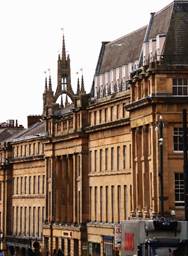
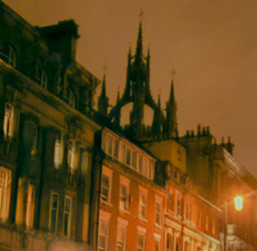
The crowning jewel of Grainger Town is Grey Street. Described by the architectural historian Sir Nikolaus Pevsner as one of the finest streets in England, its elegant curve leads downhill from Grey’s Monument toward the river. The buildings along Grey Street, including the magnificent Theatre Royal, feature graceful Georgian facades, predominantly in local sandstone, giving the area a distinctive, cohesive aesthetic. The nearby Grainger Market, an impressive Victorian market hall dating from 1835, and the elegant Central Arcade, a beautifully preserved Edwardian shopping arcade with a barrel-vaulted glass roof, further cement Grainger Town’s reputation as a treasure trove of classical design.
Layers of History: Medieval to Jacobean
The city’s deep historical roots are physically manifest in its oldest structures. The original Norman fortress, Newcastle Castle, which gave the city its name, comprises the 12th-century Castle Keep and the 13th-century Black Gate. These rugged stone structures stand as powerful reminders of the city’s role as a medieval border defence. The nearby St. Nicholas’ Cathedral showcases a mix of medieval Gothic architecture, most notably its distinctive crown spire.
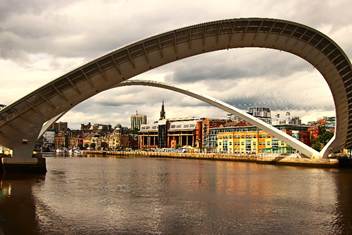
Moving closer to the river, the Quayside area reveals further historical layers. Here, you find rare examples of domestic Jacobean architecture, such as Bessie Surtees House, a stunning timber-framed merchant’s house from the 16th and 17th centuries. These structures illustrate the city’s early commercial significance as a trading center.

Industrial Strength and Modern Statements
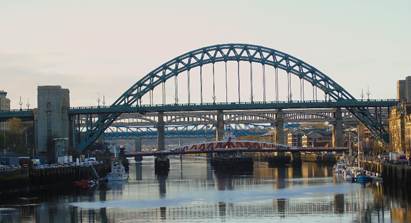
The River Tyne itself is spanned by a series of magnificent bridges that speak to Newcastle’s engineering prowess, particularly during the Victorian era. The most iconic is the Tyne Bridge (1928), a soaring steel arch often compared to Sydney Harbour Bridge, which embodies the city’s industrial spirit.
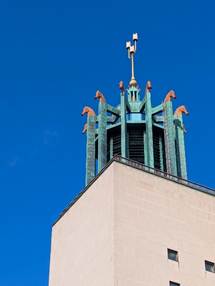
The later 20th century introduced both challenging and celebrated styles. The 1960s and 70s saw the emergence of Brutalist and Modernist architecture, such as the curved concrete Manors Car Park and the distinctive, colourful social housing complex, the Byker Wall, designed by Ralph Erskine. The Newcastle Civic Centre (1960s) is also considered a notable, well-executed example of post-war Modernism.
The waterfront has been dramatically regenerated, incorporating striking contemporary architecture on both sides of the river, though many of the most famous new structures are technically in Gateshead (the South Bank). These include The Sage Gateshead concert hall, with its silver, shell-like form, and the BALTIC Centre for Contemporary Art, housed in a converted flour mill. Connecting the two cities is the elegant, tilting Gateshead Millennium Bridge, a pedestrian and cycle bridge that acts as a modern counterpart to the historic Tyne bridges.
This continuous dialogue between the preserved elegance of Grainger Town, the enduring presence of its medieval past, and the dynamic shapes of its modern riverfront is what makes the architecture of Newcastle upon Tyne so vibrant and uniquely appealing.